Written by Mahi Kashyap, CEO · Reviewed by Gurudev Shrie Kashyap, Chairman & Founder, All India Institute of Occult Science · Published 20 Nov 2026
Key Takeaways
- Reiki levels follow the Usui system's three traditional degrees: Level 1 (self-practice), Level 2 (practice for others and distance Reiki) and Level 3 (Master/Teacher).
- Many schools add a Grand Master stage after Level 3; this is a later addition, not part of Mikao Usui's original three degrees.
- Each level includes an attunement, a short ritual in which a Reiki Master is said to open the student to Reiki energy.
- A common tradition is at least 21 days of daily self-practice after Level 1, and several months of practice before the Master level.
- Reiki is a complementary relaxation practice. It is not a substitute for medical diagnosis or treatment.
You have heard about Reiki from a friend, perhaps tried a session, and now you are curious about learning it yourself. Then you look up courses and find a confusing list: Level 1, Level 2, Level 3A, 3B, Master, Grand Master. What do they mean, and where should you start?
The good news is that the structure is simpler than it looks. Every level builds on the one before, and each one adds a clear new ability.
This guide explains each of the Reiki levels, what an attunement is, how long to practise between levels, whether you can learn online, and how the Institute's course is structured. If you are new to Reiki itself, read our introduction to what Reiki is first.
A Short History: Where Reiki Levels Come From
Reiki was developed in Japan by Mikao Usui in the early 1920s. Usui taught in three degrees, known in Japanese as Shoden (first teachings), Okuden (inner teachings) and Shinpiden (mystery teachings). Through his students, especially Chujiro Hayashi and Hawayo Takata, Reiki spread to Hawaii, the United States and then worldwide.
As Reiki travelled, different lineages added their own divisions. Some split the third degree into a practitioner-master stage and a teacher stage; many Indian schools also offer a Grand Master programme. So when you compare courses, it helps to map each one back to the original three degrees.
Reiki Levels at a Glance

| Level | Traditional name | Main focus | You can |
|---|---|---|---|
| Level 1 | Shoden | Self-healing and hands-on basics | Practise self-Reiki daily; give simple sessions to family |
| Level 2 | Okuden | Reiki symbols, distance Reiki, practice for others | Give full sessions, including distance sessions |
| Level 3A | Shinpiden (practitioner) | Master symbol, deeper personal practice | Deepen your own practice and sessions |
| Level 3B | Shinpiden (teacher) | How to give attunements and teach | Teach and attune students, according to your lineage |
| Grand Master | Later addition | Advanced techniques, teaching all levels | Teach Master-level students, in schools that offer it |
Reiki Level 1: Self-Healing and the Basics
Level 1 is about your own practice. It usually covers:
- The history and principles of Reiki, including the five Reiki precepts ("Just for today, do not anger, do not worry, be grateful, work diligently, be kind to others").
- The Level 1 attunement.
- Hand positions for self-Reiki, from the head to the feet.
- Basic hand positions for giving a short session to someone else.
- Grounding, Gassho meditation and a daily routine.
Most teachers ask students to practise self-Reiki every day for at least 21 days after Level 1, a period often described as a cleansing or settling phase.
Reiki Level 2: Symbols and Distance Reiki
Level 2 introduces the traditional Reiki symbols, which practitioners use to focus intention, including one used for distance Reiki. In most lineages, the symbols are taught directly by the teacher and kept private out of respect, so a good course will not simply publish them online.
Level 2 typically covers:
- The Level 2 attunement.
- Three Reiki symbols and how they are used.
- Distance (absent) Reiki sessions.
- Full-length sessions for others, with ethics and client care.
- Reiki for situations and goals, as practised in many schools.
Which Level Do You Need?
Not everyone needs to complete every level. If your goal is personal calm and a self-care routine, Level 1 with steady daily practice may be enough. If you want to offer sessions to family, friends or clients, including at a distance, Level 2 is the usual stopping point. Level 3 and Grand Master suit those who feel drawn to deepen their practice for many years or to teach. Choose the level that matches your purpose, not the longest list of certificates.
Reiki Level 3: Master and Teacher
Level 3 is the Master level. Many schools, including the Institute, split it into two parts:
- Level 3A (Master practitioner): the Master symbol and its attunement, advanced meditation and deeper self-practice.
- Level 3B (Master teacher): learning how to give attunements and how to teach Levels 1 and 2 responsibly.
Becoming a Reiki Master is less about power and more about responsibility: consistent practice, humility and care for students.
The Grand Master Path
Grand Master programmes are offered by many schools, especially in India, as an advanced stage after Level 3. Content varies by lineage. It commonly includes additional techniques, a review of all levels, teaching methodology for Master-level students and integration with related practices.
Because it is a later addition, there is no single global standard for "Grand Master". Ask any school what exactly the programme covers and how it connects to the Usui degrees.
What Is a Reiki Attunement?
An attunement (also called an initiation or reiju in Japanese tradition) is a short ritual performed by a Reiki Master at each level. Practitioners believe it opens the student's energy channels so they can work with Reiki.
During an attunement, students usually sit quietly with eyes closed while the Master performs a sequence of hand movements and symbols. It typically takes 10 to 20 minutes. Experiences vary: some people feel warmth, tingling or deep calm; others notice little at first. Both are considered normal.
The attunement is a tradition within Reiki practice. Its effects are described from experience, not established by scientific research.
How Long Should You Wait Between Reiki Levels?

| Between | Common practice period | Why |
|---|---|---|
| Level 1 and Level 2 | At least 21 days, often 1-3 months | Daily self-practice settles the basics |
| Level 2 and Level 3A | 3-6 months | Experience giving sessions to others |
| Level 3A and Level 3B | Varies; often a few weeks to months | Deepen personal mastery before teaching |
| Level 3B and Grand Master | Several months | Teaching experience |
Some schools teach levels closer together. What matters most is honest daily practice in between, not the calendar.
Can You Learn Reiki Online?
Yes, many people now learn Reiki through live online classes. Teaching, hand positions, meditation and Q&A work well on video, and distance attunements are an accepted practice in many lineages, based on the same principle as distance Reiki. What matters is live contact with a teacher, the chance to ask questions and support while you practise. Pre-recorded videos alone, with no teacher contact, are not recommended.
A Simple Daily Self-Reiki Routine
Whatever level you are at, daily practice is the heart of Reiki. A simple routine many teachers suggest:
- Sit or lie down comfortably and take a few slow breaths.
- Bring your hands together in Gassho (prayer position) and recite the five precepts.
- Place your hands on each self-Reiki position for 2-3 minutes, from head to feet.
- End with a moment of gratitude and a glass of water.
Twenty to thirty minutes a day, done regularly, builds more experience than occasional long sessions. Many people also combine Reiki with meditation or reflective practices such as those described in our guide to the Akashic Records.
What a Reiki Session Feels Like
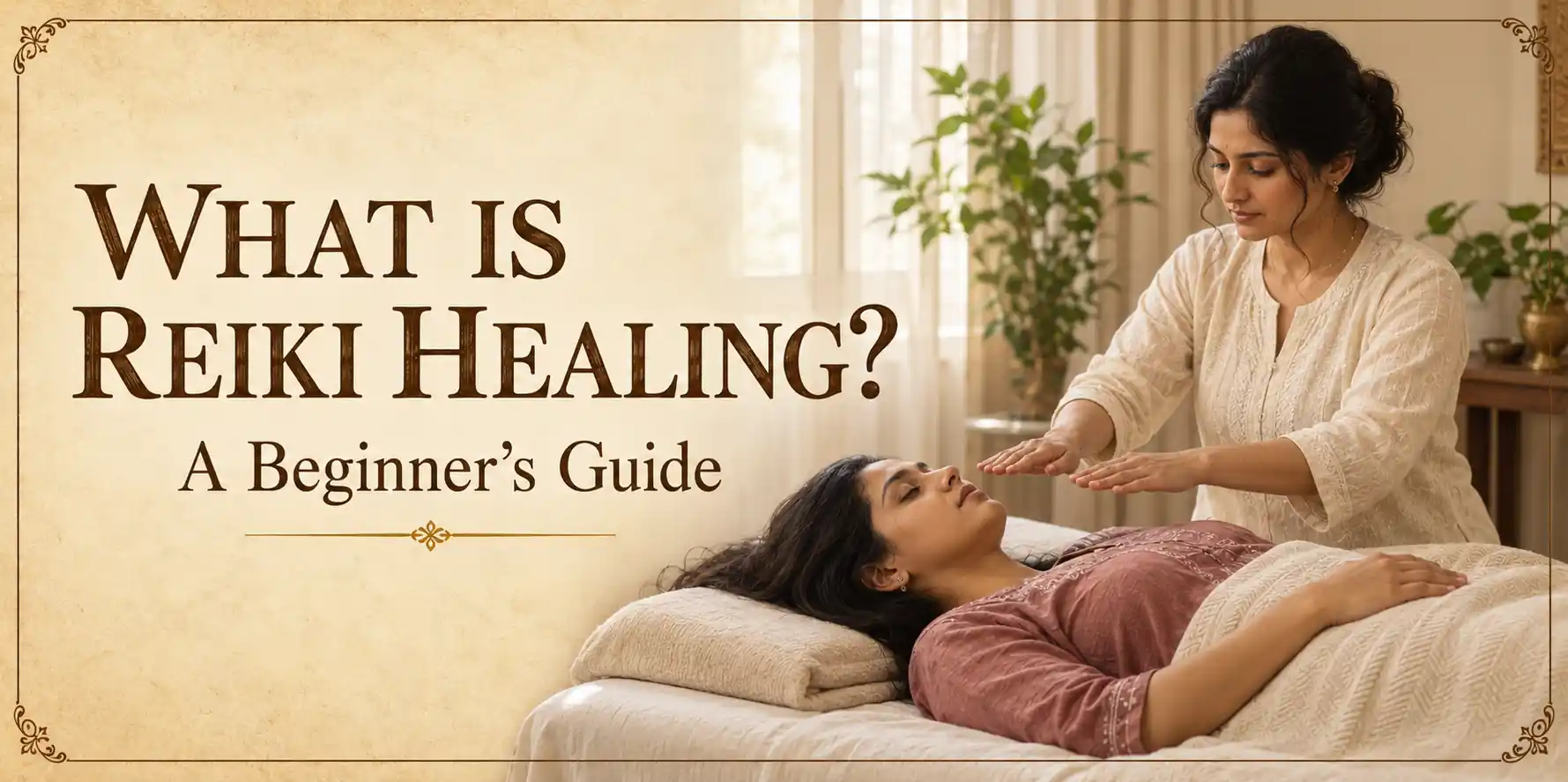
Once you reach Level 2 and start giving full sessions, it helps to know what clients usually describe. A typical session lasts 45-60 minutes. The client lies fully clothed on a couch or sits in a chair, and the practitioner places their hands lightly on or just above a series of positions. Many people report warmth, gentle tingling, heaviness or deep relaxation; some fall asleep; some notice very little. Practitioners are taught not to promise any particular sensation or result, and to let the client describe their own experience.
Common Myths About Reiki Levels
"A higher level means stronger healing."
Levels add techniques and responsibilities, but practitioners widely agree that regular practice and sincerity matter more than the title on a certificate.
"You can rush through all levels in a weekend."
Some courses offer this, but most teachers advise time between levels to practise. Skipping practice leaves you with certificates but little experience.
"Reiki Masters can cure anything."
No responsible Reiki teacher makes this claim. Reiki is a complementary practice, and anyone promising cures should be avoided.
"Once attuned, you never need to practise."
The attunement is a starting point. Daily self-practice is what traditional Reiki asks of every student at every level.
Ethics for Reiki Practitioners
- Consent: always ask before giving Reiki, including distance Reiki.
- No medical advice: never tell anyone to stop or change medication or treatment.
- No diagnosis: Reiki practitioners do not diagnose conditions.
- Appropriate touch: use light touch or hands just above the body, and explain each position first.
- Confidentiality: what a client shares during a session stays private.
Choosing a Reiki Course
- Lineage: ask which lineage the teacher follows and who attuned them.
- Clarity: each level's syllabus and duration should be written down.
- Practice support: look for practice sessions, doubt-solving and follow-up after the class.
- Honest claims: avoid any course that promises Reiki will cure diseases.
- Certificate: a clear certificate for each level completed.
What Reiki Can and Cannot Do
The US National Center for Complementary and Integrative Health notes that Reiki hasn't been clearly shown by research to be useful for any health-related purpose, though it is generally considered safe. People use it for relaxation and wellbeing.
| Reiki can | Reiki cannot |
|---|---|
| Offer a calming, structured relaxation practice | Diagnose, treat or cure any disease |
| Support a daily routine of stillness and self-care | Replace medicines, doctors or therapy |
| Complement conventional care, with your doctor's knowledge | Guarantee specific outcomes |
Reiki Levels at the Institute
The All India Institute of Occult Science's Reiki course follows this path (as of November 2026): Reiki Level 1 (1 day, 3-4 hours), Level 2 (1 day, 3-4 hours), Level 3A (1 day, 3-4 hours), Level 3B (2 days, 3-4 hours each) and Reiki Grand Master (2 days). Eligibility is 10th pass, and classes are taught live online. You can download the syllabus PDF for the full topic list.
Conclusion
Reiki levels are a step-by-step path: Level 1 for yourself, Level 2 for others and distance work, Level 3 for mastery and teaching, and Grand Master in schools that offer it. Take your time between levels and let daily practice, not certificates, set your pace. When you are ready to begin, explore the Institute's Reiki course, or book a free demo class to meet a teacher first.
Reiki is a complementary practice and is not a substitute for medical diagnosis or treatment. Please consult a qualified doctor for any health concern. Read our disclaimer.